A Museum of Games
A museum is more than pieces of art in a stuffy building. A gallery isn’t just sculptures and paintings of people you never met. It is an archive; a record of cultural history. Museums can be windows into the hearts and minds of our ancestors, a glimpse into their lives, hopes, and dreams.
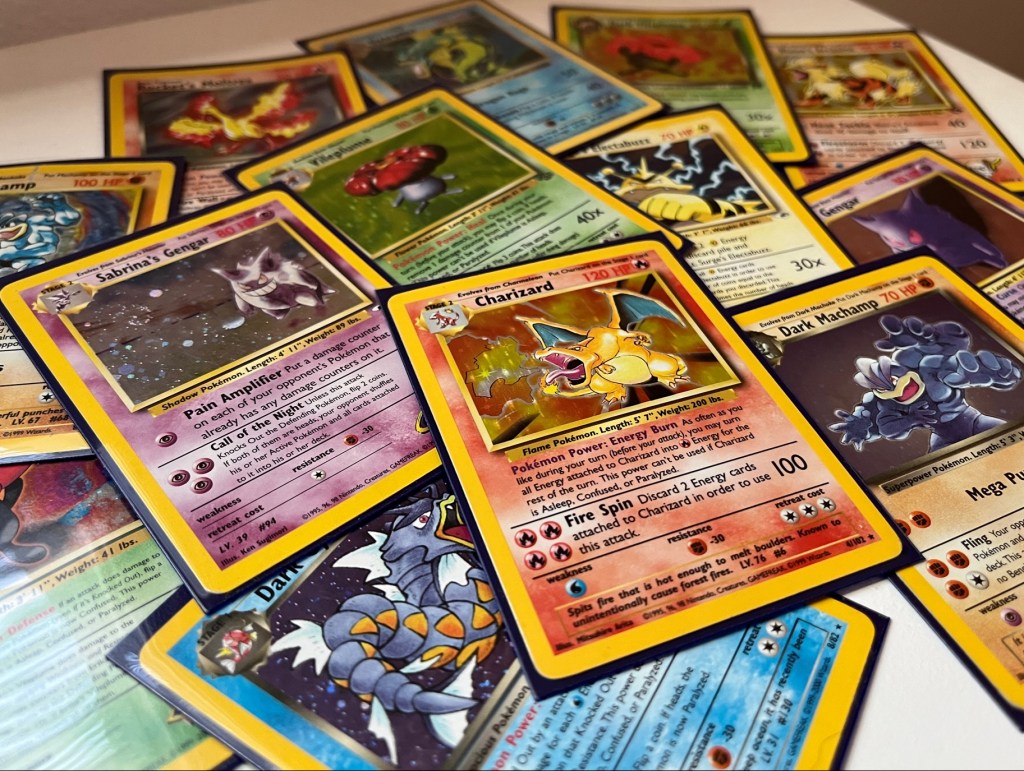
Now, my office is not a museum and I am no historian. But I am a curator, and a budding collector of quality games. So when I moved across town recently and unpacked my boxes of cards, I took a few moments to marvel at the old collection of Pokémon cards that have been sitting in binders for years.
The thought crossed my mind – what do I do with these? Are they just a sentimental object that I admire every few years when I move? Are they an asset to be offloaded on a rainy day? Something told me there was more to this than I was giving credit.
Digging into the Archives
A few days later I was working on my Magic cube, and the idea sparked to life. To immortalize those old Pokémon cards in a way that makes them more than mere show pieces in a glass case. I could build a Pokémon cube, filled with all the iconic and memorable cards from the first sets in ’98/’99. This would be a way for my collection to not just be appreciated, but used and utilized for years to come. It would be a celebration of the frenzied days when Pokémon was at its zenith.
The project made for an interesting lesson in the history and depth of Pokémon’s early days. It gave me a reason to bring my childhood to the fore. And it invited me to delve into the full catalog of old cards in search of hidden gems and classic favorites. Most importantly, it let me explore why I and so many others found ourselves enthralled by this game back in 1998.
Striking the Right Balance
To start, I settled on a size for the cube; 360 cards. The minimum size needed for a standard eight player draft. That would let me keep the list lean, and really showcase the highlights while ensuring gameplay stays tight.
One unique challenge of building a Pokémon cube is the nature of evolutionary lines. You can’t put Charizard in a cube without also including Charmander and Charmeleon. On top of that, to ensure players can work their way up the evolutionary line, they need a critical mass of basic Pokémon from which to build. So the cube’s Pokémon list becomes something of a pyramid, with lots of basic Pokémon, some middle evolutions, and precious few full evolutions at the top.
This dynamic meant that I needed to be particularly discerning when it came to the evolution lines that I chose to include, because I would be running out of space fast. So which to choose? Here are a few of the criteria I came up with:
- Recognition: How well known is the Pokémon? Did it play a special role in the TV show or video games? Something iconic like Pikachu or Mewtwo would be a shoe-in for this reason.
- Power: How strong is this Pokémon’s card(s)? Some iconic Pokémon were unfortunate to get cards that are undeniably weak compared to their peers, and those would miss the cut as a result.
- Diversity: How many versions of this Pokémon are out there? In the early sets of Pokémon, there were some cards that got several versions, and others that got only one. The more versions available to chose from, the better.
- Type: What type of Pokémon is it? Some types like Grass were much more prevalent than others, leading to more competition for the same number of spots. Others, like Electric types, needed duplicates because of their lack of depth.

Crafting the Total Experience
As I finalized the list of cards that would be included in the cube, I gave some thought to how it would be presented. While Pokémon cards are still around today, the game was never a fulcrum for card shops. It was flashy and cool, and not particularly deep. Preserving the magic and wonder of the experience is a huge part of the Pokémon mythos. So I settled on it being a bit of a novelty, and taking it out for only special occasions.
Ultimately, the art, the flavor, and the holographics all drew in a generation of young players like me. So to relive that memory, and to teach and pass on that legacy means the world to me. Who’s to say whether kids in 20 years will still be wowed by a Charizard, or the history behind it. But for my part in my growing museum of games, I’m itching to find out.
 Gallogly Games