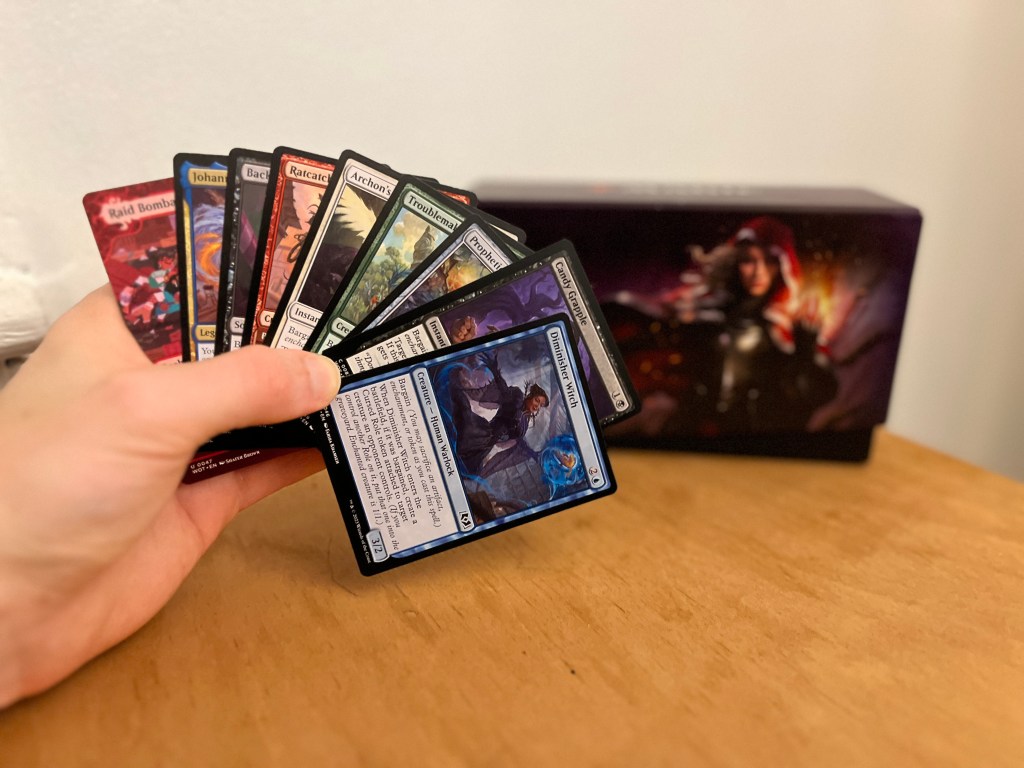
Recently we got the biggest news for limited Magic since the introduction of remastered sets: Boosters are changing, again. The latest change announced by Wizards of the Coast is the discontinuation of both Draft and Set Boosters, in favor of the new Play Boosters which combine elements of both.
These will be draftable packs with a chance to pull multiple rares/mythics, along with numerous other cards including those from The List. Here’s a quick rundown of what’s in a Play Booster:
- 6 Commons
- 1 Common/List card
- 3 Uncommons
- 1 Rare/Mythic
- 1 Basic land
- 1 Nonfoil Wildcard (A card of any rarity)
- 1 Foil Wildcard (A card of any rarity)
- 1 Token/other trash
First thing you’ll notice is the lack of commons; we’re going from 11 to 6-9 in a given pack. That alone would change the calculus for most drafts, but there’s also the List to consider. While Wizards has said they will be slimming the List from the usual 300 cards to 40, these are still cards from a wide range of sets and eras that could very meaningfully change an event. Beyond that, the chance to open multiple rares/mythics will undoubtedly impact draft, and sealed even more so. So how did we get here, and what does it mean?
The Secret Cube
Way back in March 2021, Wizards fundamentally changed boosters with the release of Time Spiral Remastered. It was a love letter of a set curated to bring all the best elements of Time Spiral block into one huge experience. But the real reason the set was so large was the inclusion of the retro frame cards – themselves a callback to the retro frame cards included in original Time Spiral.
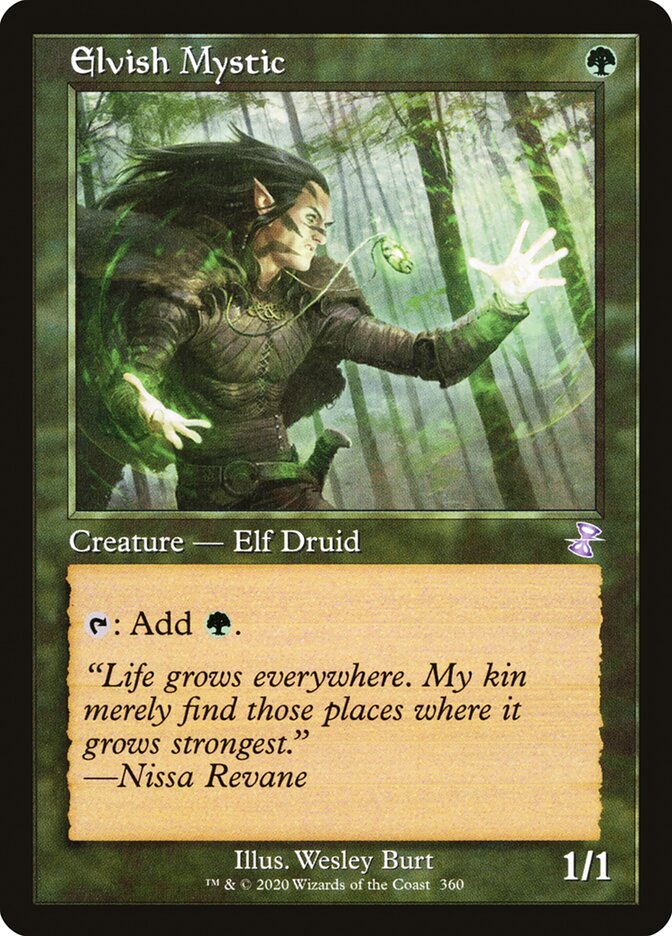
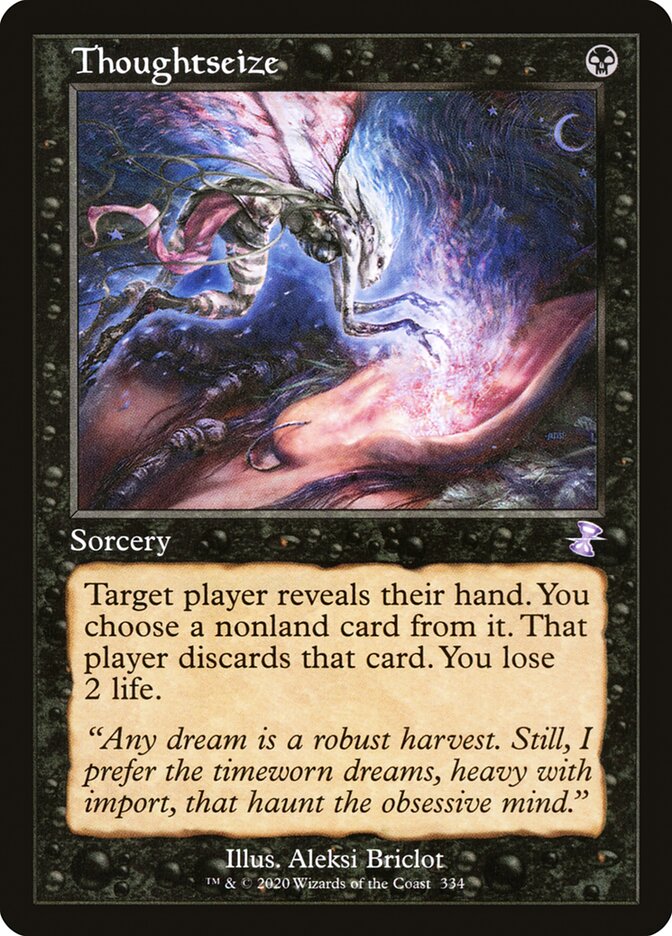
These retro frame cards were not from Time Spiral block, but from all over Magic. There was one in every pack, and they all shared the same rarity, making it just as likely you open an Elvish Mystic as a Thoughtseize. They were for all intents and purposes a second set, seeded within TSR – a secret cube that could mildly or drastically change any given draft or sealed pool.
Down the Rabbit Hole
Just a month later came Strixhaven: School of Mages. In Strixhaven, Wizards used a similar concept to the retro frame cards in TSR. The difference was, since STX was standard legal, these had to be made into a unique set. Enter the Mystical Archive – one card in each STX booster from a 126 card standalone set.
These “Bonus Sheet” cards would be themed around a certain aspect of gameplay, and would be legal in limited (and Historic) but not standard. This approach also allowed Wizards to put cards at different rarities, ranging from uncommon to mythic. And thus contained within the Mystical Archive was everything from routine playables like Shock to outlandish bombs like Time Warp.
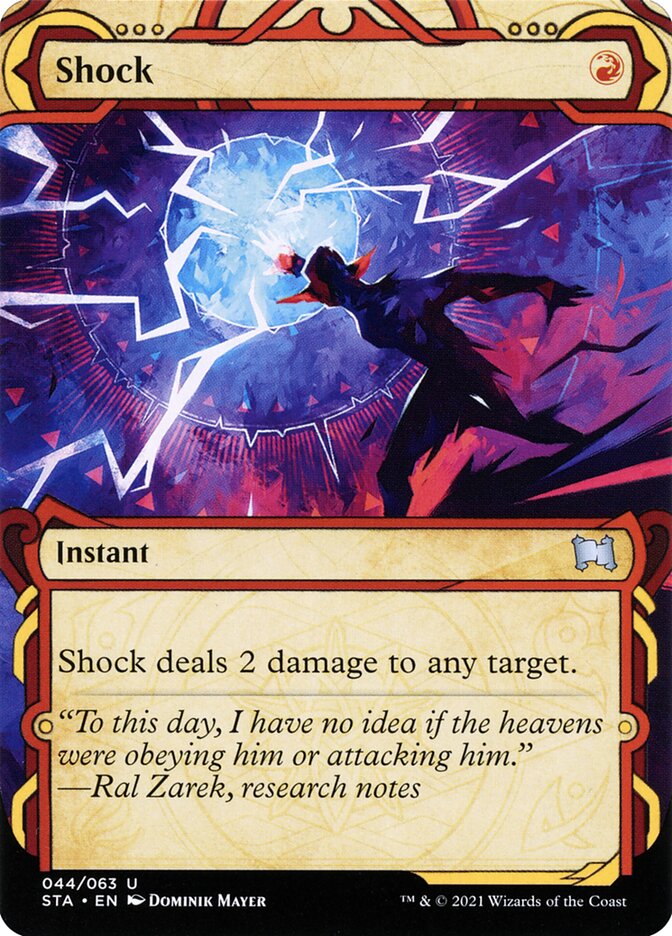
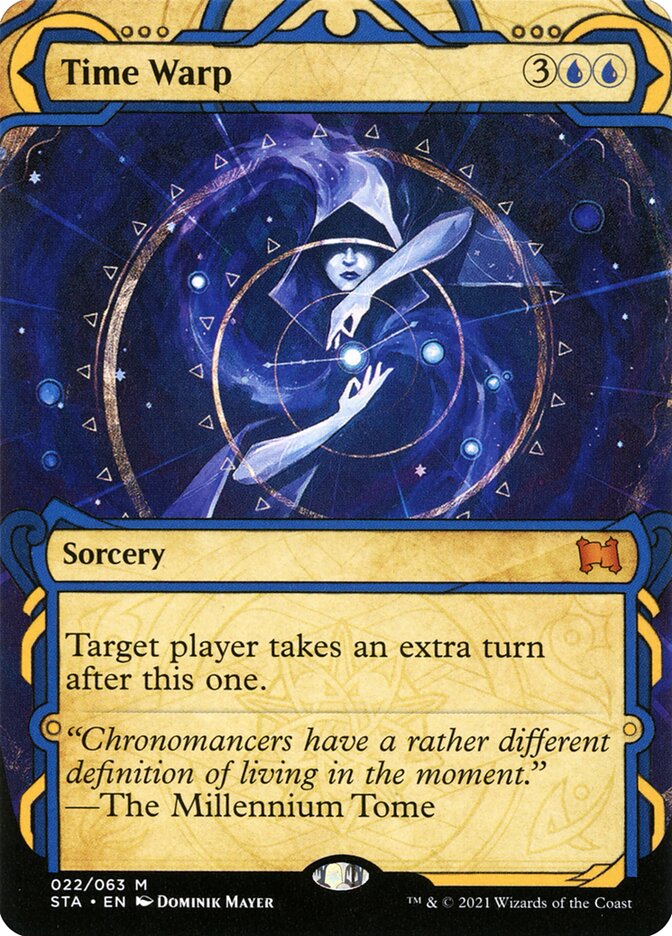
To say that the bonus sheet cards were popular would be a massive understatement. They were the best thing about both TSR and Strixhaven, full stop. So following that success, Wizards implemented the same process in later sets: The Brothers’ War had the Retro Artifacts, March of the Machine had the Multiverse Legends, and Wilds of Eldraine had the Enchanting Tales. And while all of these sets have been well received and the reprints in their respective bonus sheets much appreciated, there was a small cost: multiple rares per pack would mean a less predictable draft pool, and thus a more volatile limited environment.
The Hard Part
As the complexity and wordiness of cards has risen over time, limited environments have become harder to learn and master. This is partly due to the game’s natural progression and age, and partly due to changes to the structure of boosters like the addition of bonus sheets. Whereas five years ago a booster contained commons, uncommons, and a rare (and the occasional foil), now players will have to account for more cards of high rarities, other unrelated cards in their draft or sealed pool, and more complexity in play and deck building. This not only adds to the learning component by increasing the total number of cards to read and memorize, it also makes gameplay more challenging by forcing players to play around and utilize exceptionally narrow or unusual cards.
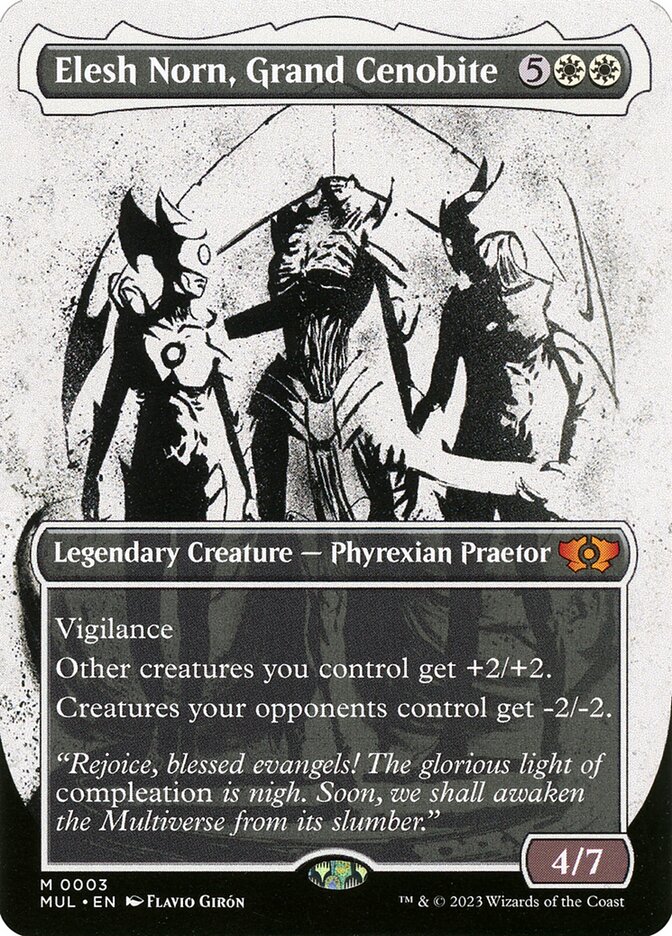
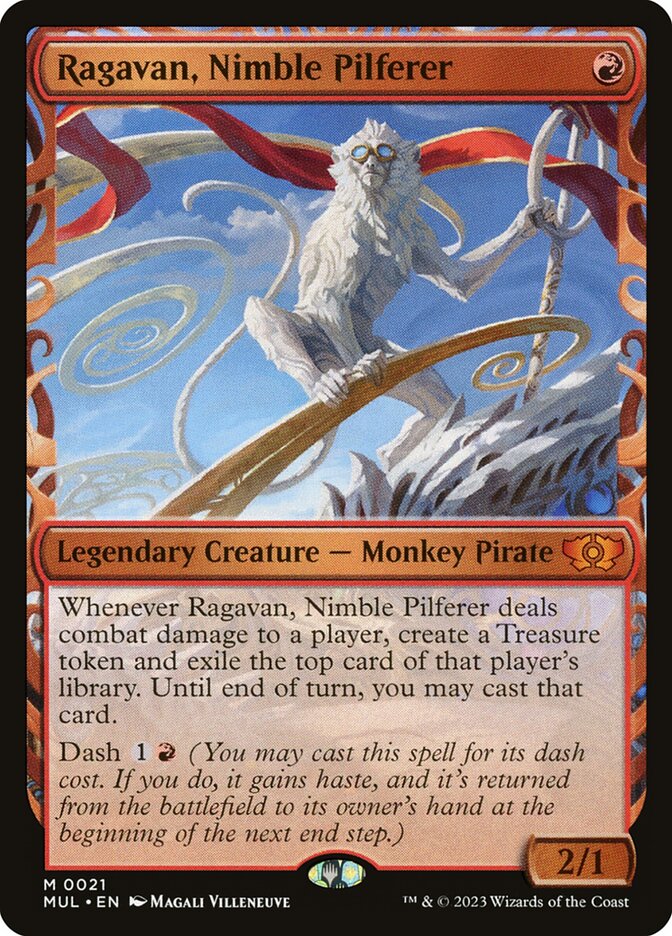
This change in structure also directly impacts the difficulty and variance of drafting by introducing more bombs, including those from other sets. As every limited player knows, bombs can have a warping effect on formats that are otherwise mostly balanced. In the case of March of the Machine for instance, many of the Multiverse Legends did just that. The mythics in particular tended to play an outsized role in limited. Cards like Elesh Norn, Grand Cenobite and Ragavan, Nimble Pilferer could dominate matches without any meaningful synergy or deckbuilding cost to the player, and offered very little counterplay to their opponent.
This effect also cuts in the other direction, with unplayable reprints being shoehorned into an otherwise vibrant limited format. Looking at the Enchanting Tales bonus sheet for instance, we saw a large proportion of cards that are at high rarity but are basically unplayable in limited, creating another significant hurdle for new players who may mistake rarity for raw power. Thus the addition of more rares and outside cards to a draft environment also brings with it a ratcheting up in drafting skill level, as judging the power level of cards becomes harder.
At the same time, these new conditions make reading signals harder and more opaque. The existence of multiple high power cards in a single pack often leads to players being forced to pass powerful cards in their colors, creating mixed signals down the line of drafters. This will be even more pronounced for newer players who will struggle to discern the “best” card in a pack amid all the noise.
Ready, Set, Play Boosters
With the introduction of Play boosters, we’ve reached the logical next phase of Wizards’ varied and usually popular (looking at you Double Feature) practice of upping the number of high rarity cards in packs. The Magic team has decided that merging the practicality of draft boosters with the collectibility of set boosters will produce the best of both worlds.
The tough part about this solution (beyond upping the price of every draft forever) is that all the same issues created by bonus sheets will be far more pronounced in Play Boosters. Multiple rares, cards from the List, fewer commons; all these factors will work against newer players who need to learn how to swim before being thrown into the deep end.
Now, as a long-time drafter I can get excited about opening some sick rare from 2009 in my Play Booster. And as someone who doesn’t particularly like sealed I can ignore the chance of someone opening 20 rares in their pool while I open six. But do these changes really improve the limited experience for all players? For new players? Only time will tell. One thing is for certain; limited is getting harder – again.
 Gallogly Games