How Magic’s designers are pushing the game to it’s limit with too much of a good thing
By Martin Gallogly
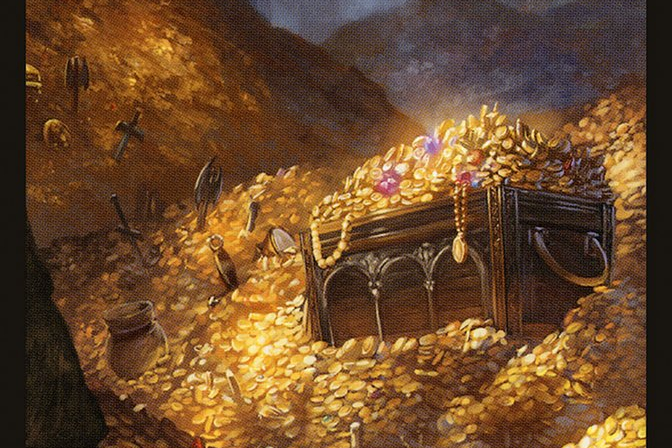
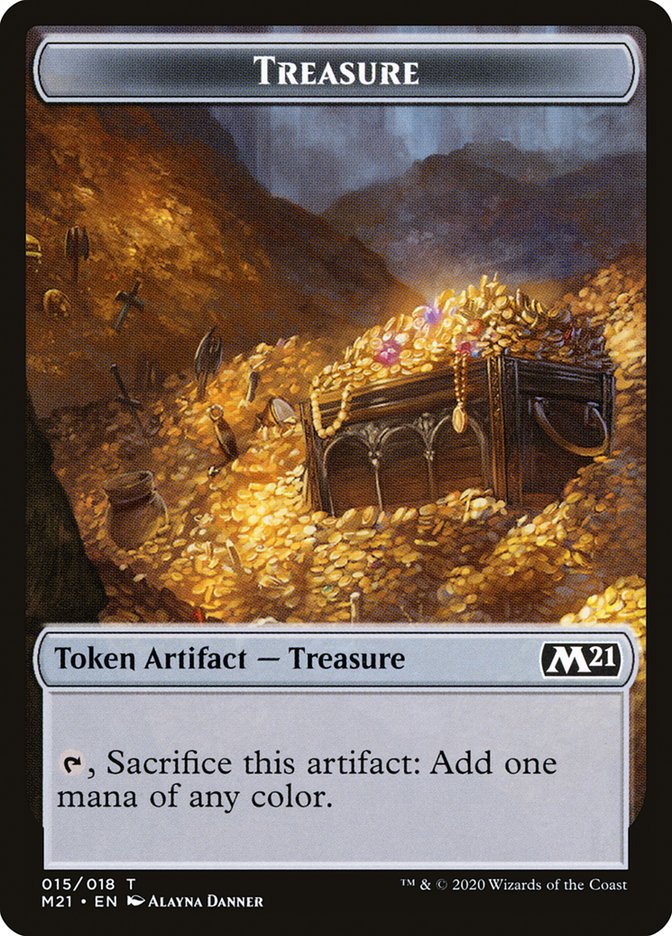
If you play Magic: the Gathering’s most popular format, Commander, you’ve almost certainly come into contact with the most ubiquitous artifact tokens: treasures. The game is rife with them. In a format that encourages players to play multiple colors and bolster their board presence before the game gets out of hand, treasures are an easy way to ensure mana fixing and accelerate you to victory.
But what happens when these tokens show up in competitive formats? What becomes of Standard or Modern when treasures are not just a way to perfect a (strong) mana base but also enable your deck to complete a win on turn three?

A Resource Game
The mana system in Magic is one of the most fundamental reasons for the game’s long and rich history of success. For all the complaints of mana flood and mana screw, the use of lands and colors of mana to govern the speed and texture of the game is nigh unparalleled. The one-land-per-turn system and the diversity of lands creates incentives for deck building that do not exist elsewhere, and should be lauded as an innovation that will outlive the game itself.
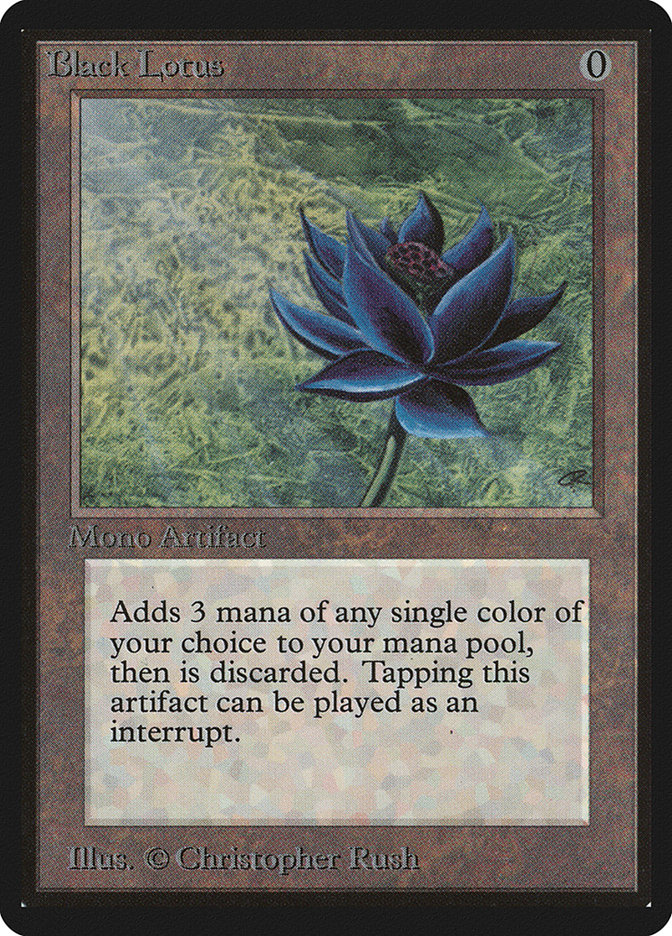
Yet since its inception in 1993, there have been ways to cheat on Magic’s most fundamental land restriction – to jump the line and create an advantage over other players that are using only basic lands. The most famous early example is of course Black Lotus, which provides a huge burst of mana and enabled regular first turn kills back in the game’s earliest days.
The Ban Hammer
It became clear in the first year of competitive play that cards like Black Lotus were too powerful because they warped the game’s mana system too much. Magic simply didn’t function as intended when players had access to that quantity of resources that quickly. So in early 1994, Black Lotus and its ilk were banned or restricted to just a single copy per deck.
A few years later with the release of the Tempest expansion in late ’97, Magic’s designers once again tempted fate and broke the chains of the once-per-turn mana restriction. This time it was another Lotus, albeit a small one. Lotus Petal functioned exactly as Black Lotus had before it, but it only produced one mana rather than three. This huge downgrade seemed to keep Lotus Petal off the ban list, at least for a little while. It would remain legal in most formats until another set filled with ban-worthy cards was released: Urza’s Saga.

Urza’s Saga brought plenty of ways to abuse fast mana, like drawing an entire hand of new cards or “going infinite” with an endless loop of spells. This combination of a fast mana enablers and powerful cards that benefit from mana acceleration was enough to get Lotus Petal banned, along with a slew of other cards. But that wouldn’t be the end of the story.
A Modern Gold Rush
When we arrived on Ixalan in 2017, Magic’s designers introduced a new type of artifact token: Treasures. Treasures function almost identically to a Lotus Petal, which on its face should give you pause. Unlike Lotus Petals however, treasures aren’t a castable card. They have limitations that the other accelerants don’t have; namely they can’t be recurred from the graveyard or played on their own. To put it simply, treasures can only be produced by other cards, which makes them harder to abuse.
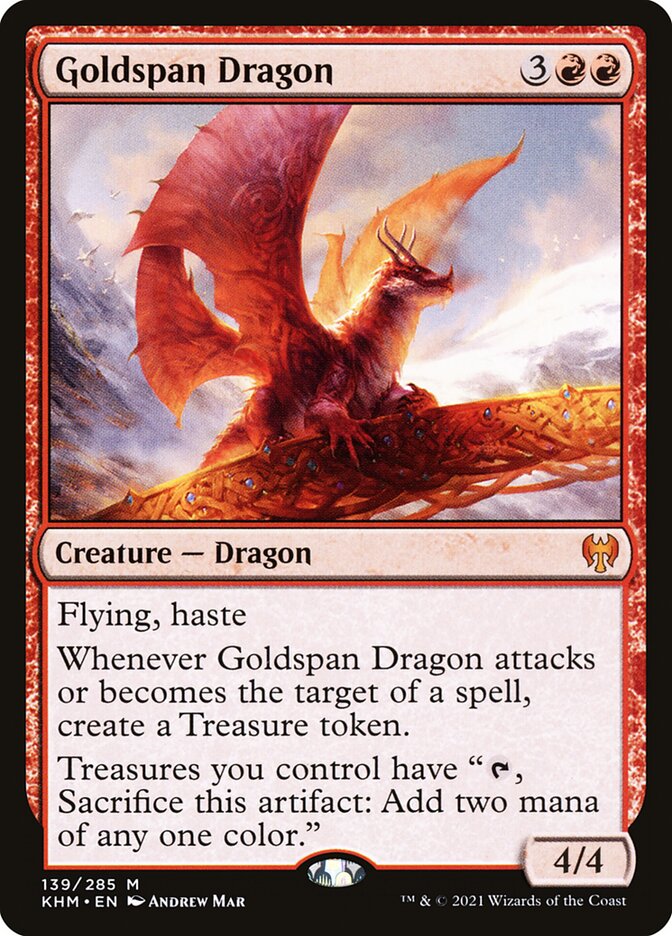
Still, mana acceleration is a potent stimulant in whatever form it takes. So while Ixalan was a forgettable block, the impact of treasures was anything but.
It would be three years before we got another mainline set that had treasures as a major theme in the form of Kaldheim. The set changed the way players looked at treasures for a few reasons. First, the set was notably more powerful than Ixalan was and so the treasure creators were proportionally stronger. Second, Kaldheim released amid a growing focus on Commander, where treasures helped enable the big splashy plays that are popular in multiplayer games.
So it became clear that these tokens would be both popular and powerful role players in a landscape that was increasingly trending toward Commander. And why not? From the perspective of players, lands are like boring vegetables; slow and unglamorous, they’re just a necessary part of a balanced deck. But treasure is exciting and explosive, like Pop Rocks – and Magic’s designers were ready to feed the craving for more.

The Floodgates Open
Over the next few years, set after set after set featured treasures as part of the recipe of card designs. They were in Strixhaven, Modern Horizons 2, Adventures in the Forgotten Realms, Neon Dynasty, New Capenna, Battle for Baldur’s Gate, March of the Machine, Lord of the Rings, Wilds of Eldraine, the list goes on. All of them had cards that made or cared about treasure. And those are just the main sets; nearly every one of those releases had cards exclusive to Commander that heavily featured treasures too.
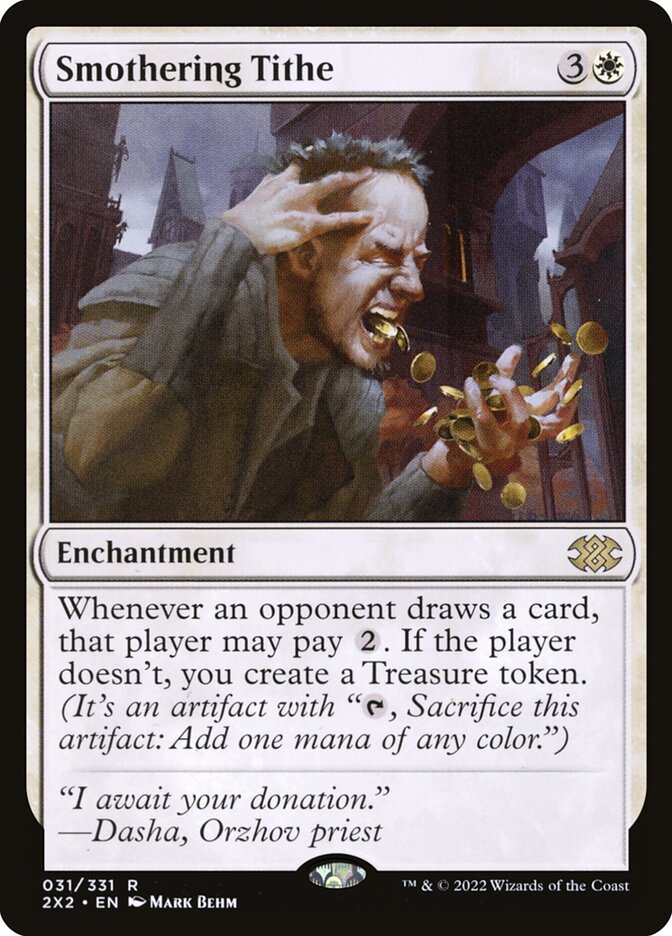
Now, just a few years after treasures went mainstream, there are nearly 300 different cards that produce these fast mana artifacts. And certain game formats are starting to strain under their shiny weight. Take Standard for example, where cards like Fable of the Mirror Breaker and Reckoner Bankbuster had to be banned for making decks too consistent and powerful. Or go to Modern where decks like Indomitable Creativity use treasures to combo off with little fear of counterplay. And of course there is Commander with its big plays and higher life totals. Even there, cards like Dockside Extortionist and Smothering Tithe have become shorthand for design mistakes.
The Long View
So where does this leave the game in the next few years? My fear is a return to the days of rampant fast mana and repeated bannings, as it seems Wizards is willing to use that power in formats like Standard. But since they don’t govern the ban list for Commander, that format will continue to accelerate into hyper speed if treasures continue to litter sets like candy wrappers. And while the prospect of faster games and splashier plays is certainly tempting, we’ve all been on enough sugar highs to know how they end. Let’s just hope Magic’s designers can master their sweet tooth before the rest of us are left with the crash.
 Gallogly Games