The process of building a new game can come to you over time, like a growing idea in the back of your mind. Or it can come to you all at once, like a tidal wave of inspiration. In either case, it’s important to maintain your vision for what goals the game aims to achieve, and who it aims to serve. That vision will guide decisions for how quickly the game plays, how many people can play it, and what type of player it will appeal to.
Just as important as your vision for a game is your ability to adapt it to the audience. That means playtesting, getting feedback, and making changes as needed. It also means remaining humble in the face of constructive criticism.
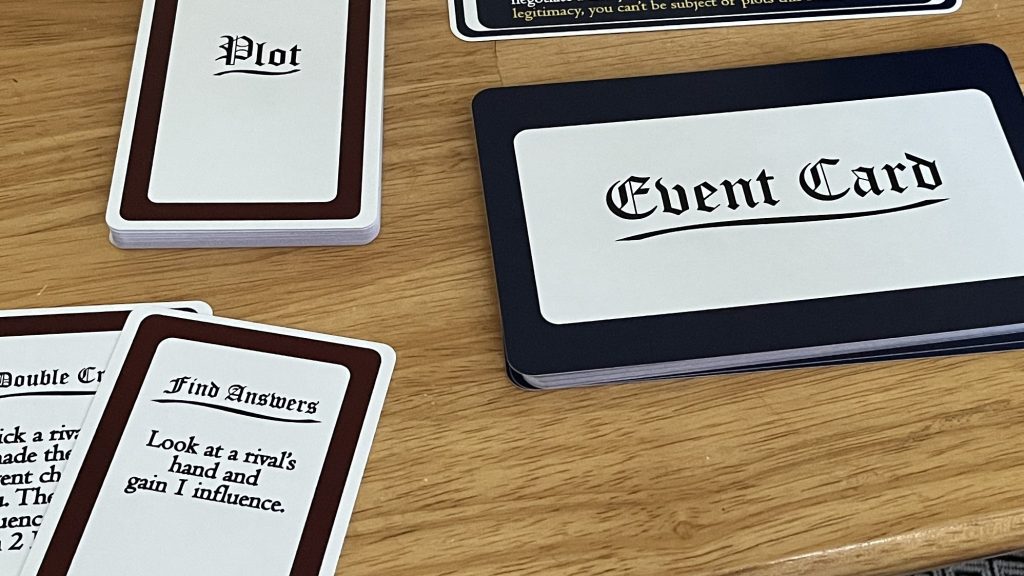
I recently got the first prototype for my latest game, “Regency Counsel” in the mail, and had my first playtest with relatives over a family vacation. The game played out largely how I had planned, with a few bumps to overcome (rules I hadn’t thought of, how to decide tie breakers – things like that). But the experience was actually very close to what I had intended. For a first pass at a prototype, that is much more promising than most of my first playtests. It might be because this is a card game with far fewer mechanics and moving pieces than something like The Fair at Grenden Village, but it also speaks to the soundness of the concept.
At the end of the game, I asked for thoughts and comments from my playtesters. The response was overwhelmingly positive, with one of my relatives asking if he could buy a copy. I laughed it off, but it was immensely gratifying to get such a good response on the first try. Still, there were no shortage of suggestions on how to smooth out the gameplay, or how to rebalance individual cards.
Those are small changes in the grand scheme of a game, so they didn’t derail my enthusiasm. But being able to take those suggestions without feeling discouraged or deflated can be difficult at times, particularly if they are happening in the context of a game that isn’t working as you intended or isn’t connecting with players in the way you expected. It can feel like a pile-on, and that makes it less likely you will meaningfully engage with player feedback.
So it is more important than ever to listen and understand player sentiment when you are at the early stages of development. Understanding a player’s perspective can unlock broader discussions about the game’s themes, mechanics, and even goals. Those are the most critical areas of feedback for a game to develop properly, and grow into a resonant and fun experience. And in listening to their council, you might learn something about your own perspective and biases, which in turn will help inform your future designs. That way, when you next bring your game to the table, you’re prepared for everything the counsel may throw at you.
 Gallogly Games